

The best places, where to stay, how not to get stuck with parking, and where to drink good Croatian wine – everything you need for a great trip.
Why visit Trogir, what to see, where to stay, how to get there, where to sleep, and where to grab a proper coffee – this is my full review of our trip to this beautiful town.
Recommended: Croatia Travel Costs 2026: How Much You’ll Spend and How to Save
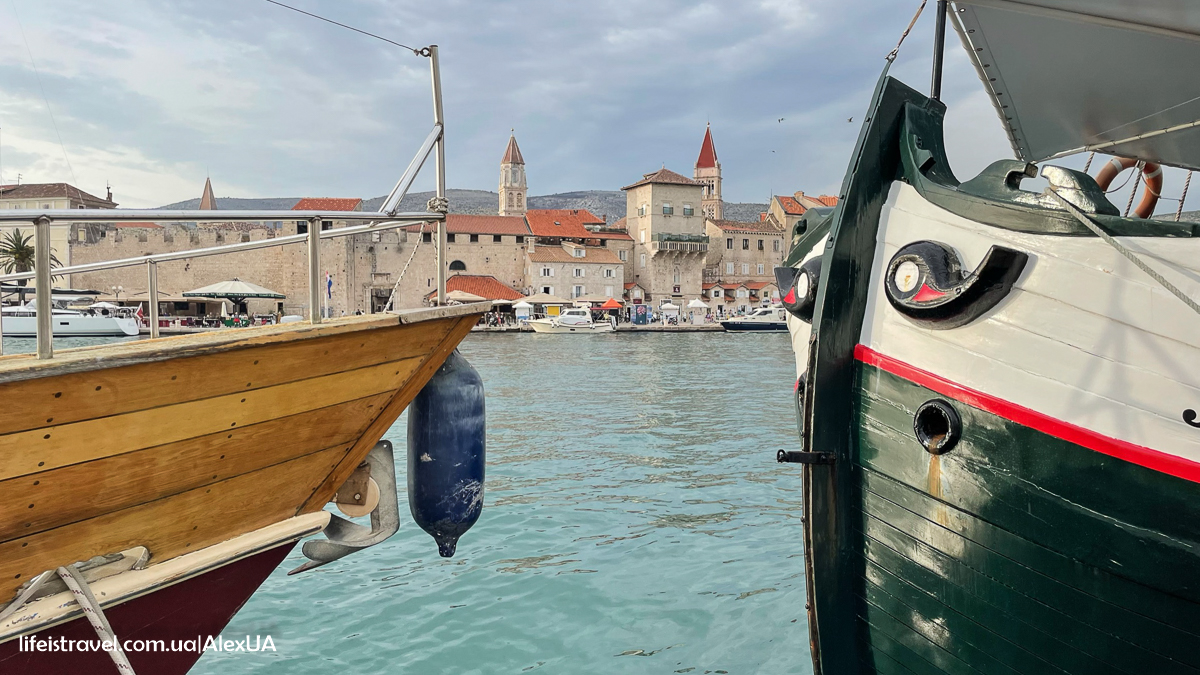
Trogir – General Info and Why It’s Worth Visiting
If cities could walk a red carpet, Trogir would have become the face of Croatia a long time ago – ancient, polished, and ridiculously photogenic. Think of it as a stone Hollywood: small in size, but with a lot of character. It sits just 30 km from Split Airport, right on the route between the beach mood of the Makarska Riviera and the cultural magic of Dalmatia.
I’d absolutely include Trogir in any Croatia itinerary.
Trogir is one of the oldest and most beautiful towns in the country. Its biggest advantage is how compact it is. Technically, you can walk through it in half a day, but I strongly recommend giving it a full day and staying overnight.
Why come here? Because Trogir is not just an old town – it’s a real open-air museum where even the cats walk around like they’re on a fashion runway. Every stone under your feet feels like a greeting from the Greeks, Romans, and Venetians. You can literally spend the day in the Middle Ages and then, in a very modern way, sit by the water in the evening with a glass of Grk – a local white wine with a lightly mineral attitude, just like the Dalmatians.
There are no trendy beach clubs here, no stylish sunbeds, and no parties until sunrise. But honestly, Trogir has something better: narrow streets, the smell of fresh croissants in the morning, cozy restaurants with string lights, and evening illumination that makes the whole town look like it dressed up for a night out. Trogir is love at first sight, especially if you have a camera, good taste, and a healthy desire to escape the crowds.
Yes, it’s small. Yes, you can walk it in half a day. But trust me – even after two days, you probably won’t want to leave. So my advice is simple: stay overnight. If only to see the bridges of Trogir reflecting in the evening light while the waiter at the café on the square starts recognizing you.
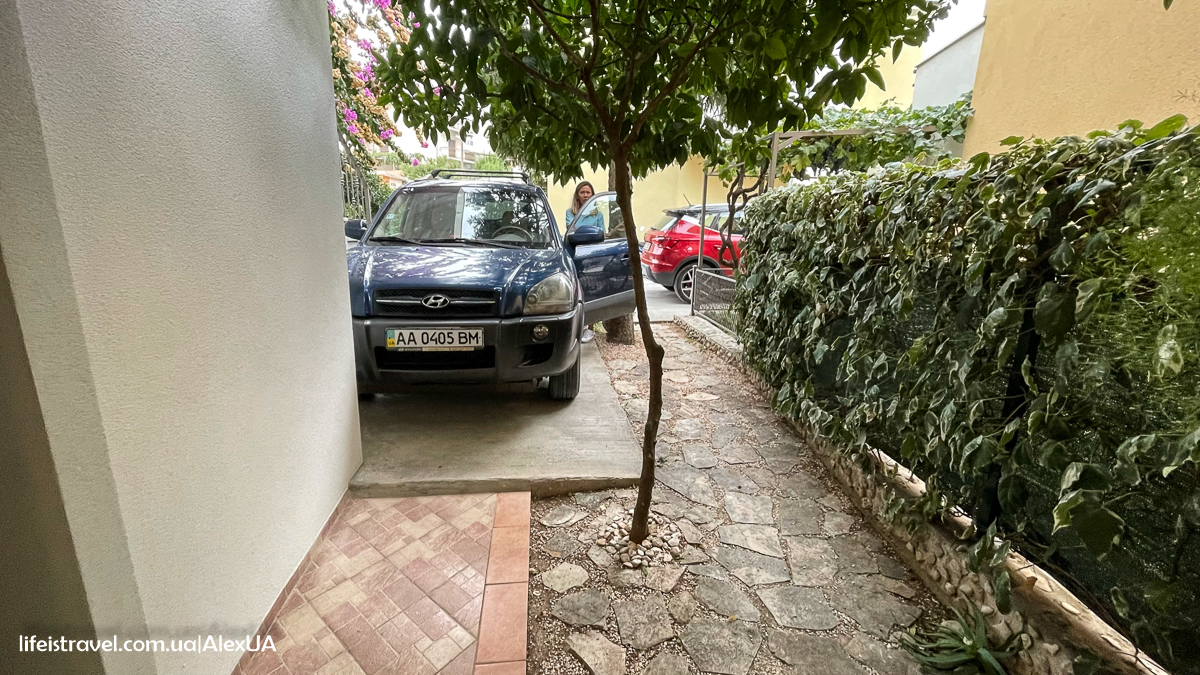
Parking in Trogir – What You Should Know in Advance
Trogir is an almost completely pedestrian town. Cars cross the bridge, and there is parking near the entrance to the Old Town. The problem is that those spots are often full, so it’s usually better to keep driving toward the next bridge – on Čiovo Island, about a 10-minute walk from the Old Town, parking is usually easier to find.
Parking can be a headache if you arrive in the middle of the day or during peak season (July–August). It’s a bit like Dubrovnik in that sense: too many cars, not enough space. My advice – come early in the morning and park on Čiovo.
There are several parking areas in Trogir:
- before the bridge leading into town,
- right after the bridge,
- and after the bridge toward Čiovo Island (on the left side of the bridge).
From any of these, you can walk to the center of Trogir in about 5–15 minutes without any problem.
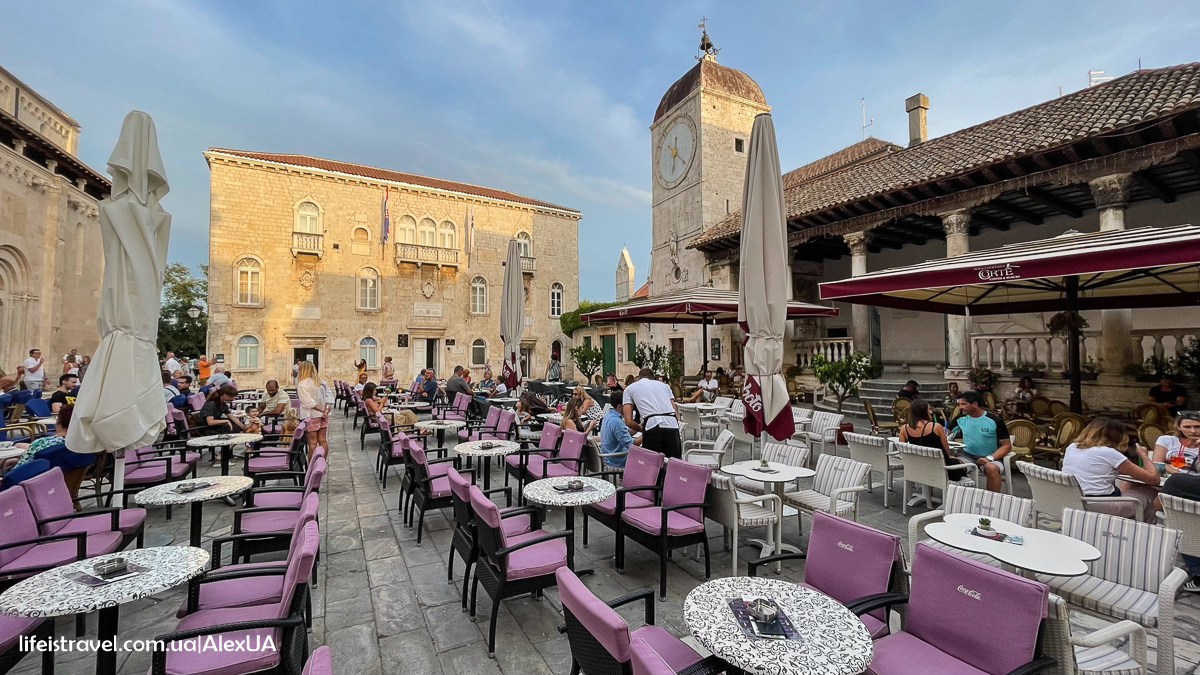
What to Do and What to See in Trogir
A morning in Trogir starts, for me, with the right coffee – strong, fragrant, and ideally with a view of life moving slowly along the waterfront instead of racing like it does in a big city. Then comes a relaxed walk through the Old Town, where every corner looks like a scene from a medieval film. The center of Trogir is not just an open-air museum – it’s a living exhibit. The walls seem to whisper stories, and the stone streets feel like they were shaped by Venetian boots.
And after that, it only gets better. Below is everything worth seeing – from ancient churches to viewpoints where the town looks like a toy model and the Adriatic seems endless.
Trogir Old Town
The center of Trogir is all about medieval stone streets, and this is where most of the town’s landmarks are located.
I recommend exploring it on your own – no guide, no rush, and sometimes even no company. There’s a special kind of pleasure in that: you turn wherever you want, stop wherever you want, and drink coffee wherever the shade and the view look right. The center is full of small shops, cozy cafés and restaurants, churches, beautiful staircases, and old façades that make you reach for your camera every five minutes.
You can get a free map of the Old Town at the Trogir tourist office – there are several around town.
Promenade / Waterfront
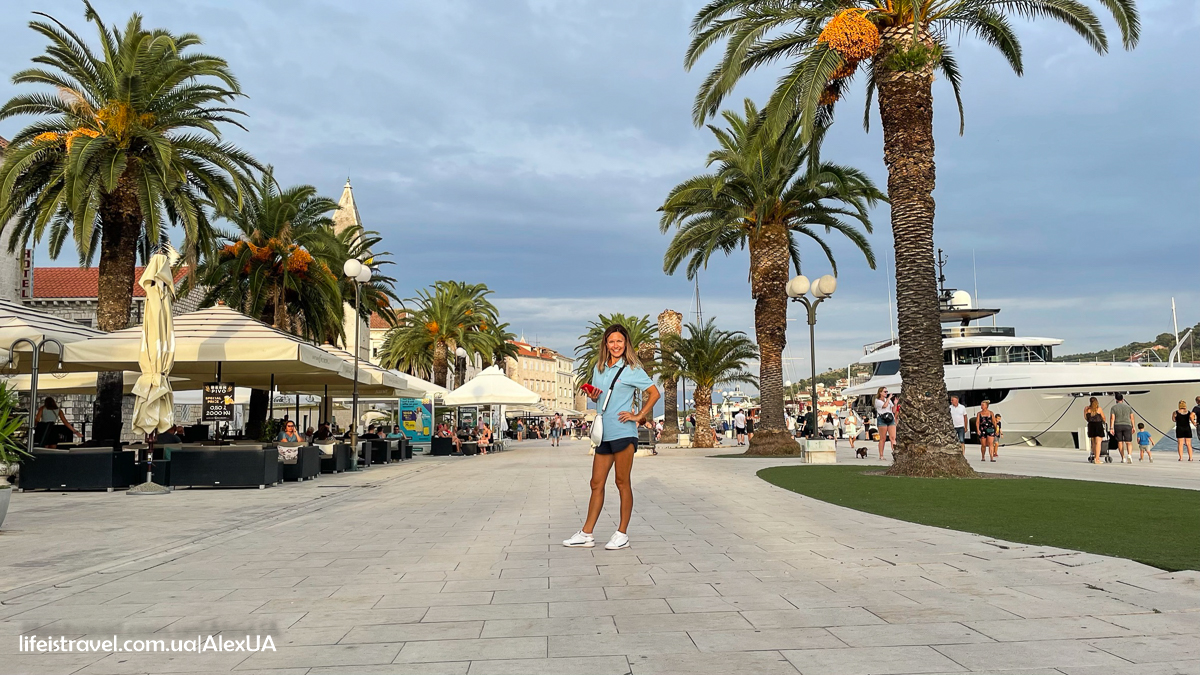
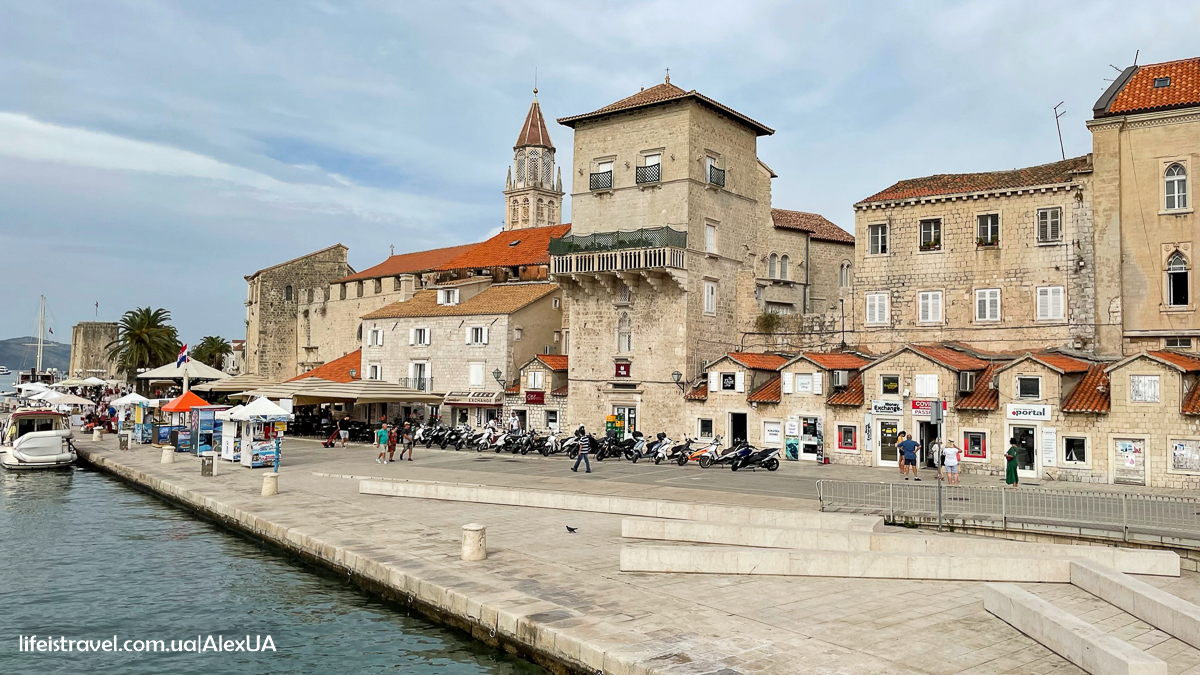
The calling card of any Croatian coastal town, even the smallest one, is the promenade. Trogir is no exception.
You can walk, or you can sit and do absolutely nothing in the best possible way: drink coffee (or something stronger), look at yachts, the sea, and people passing by. Sometimes that’s the perfect one-hour plan. Sometimes it turns into half a day.
The waterfront is right next to the Old Town, so it’s hard to miss even if you somehow tried.
Cathedral of St. Lawrence in Trogir
The main landmark in Trogir is the Cathedral of St. Lawrence. This is the real must-see in town. It took around 370 years to build (from the 13th to the 16th century), which is exactly why it feels like several eras layered into one building.
It is considered the most important structure in the Old Town, and I’d put it at the top of the list too.
A major bonus is the cathedral’s bell tower, which is also the main viewpoint in Trogir. From the top, you get an incredible view over the entire Old Town and part of the waterfront. The bell tower is 47 meters high. Entry is paid – around €5.
Bell Tower of St. Sebastian and the City Loggia
The bell tower is basically all that remains of the Church of St. Sebastian. Right next to it is the City Loggia. Both buildings date back to the 15th century (1422).
Back in the day, the City Loggia was an important public place – court hearings were held here, along with meetings of local nobility. In other words, this was the old center of decision-making, just without microphones and live broadcasts.
Cipiko Palace
What visitors can really appreciate here is the façade of Cipiko Palace, built in Venetian style. It’s a very popular photo spot, and for good reason.
The inner courtyard and interiors are closed to visitors. The palace itself was built in the 13th century – the kind of place where you stand in front of the walls and think, “This building has seen things.”
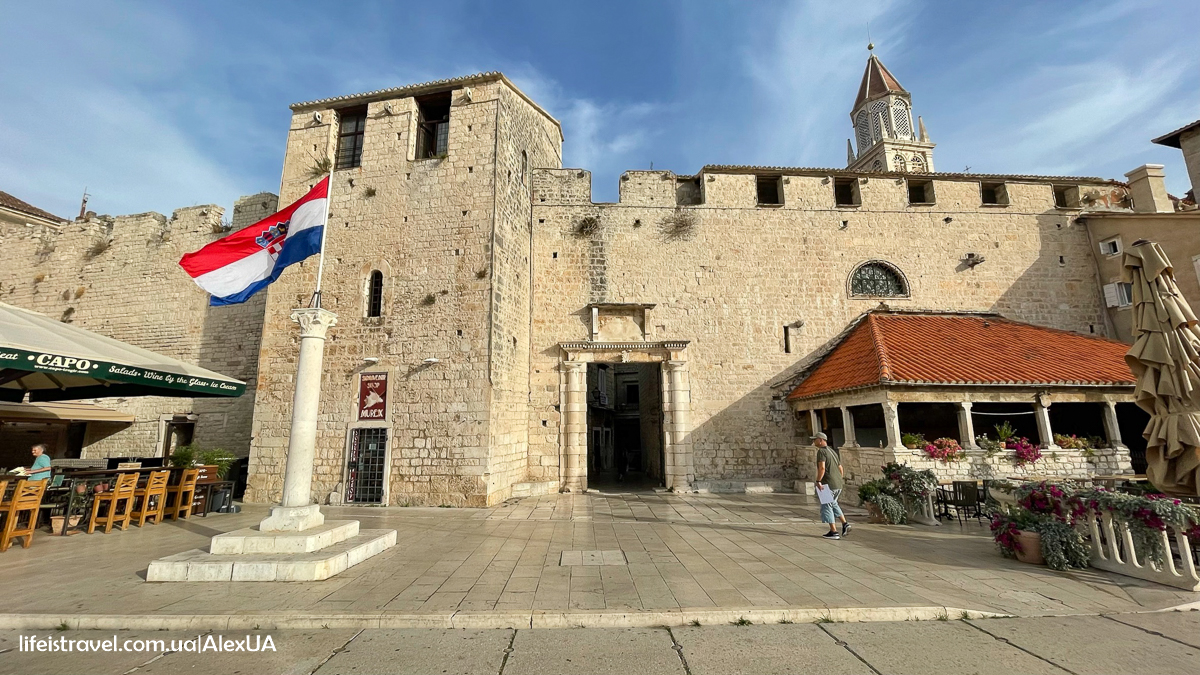
Church and Monastery of St. Dominic (Sv. Dominik)
The Monastery of St. Dominic is an important religious site in Trogir. It was badly damaged during World War II and later restored.
The monastery itself was built in the 14th century.
A fun little detail: the entrance to the monastery courtyard goes through a souvenir shop. Croatia knows how to combine the spiritual and the practical without making it weird.
Kamerlengo Fortress and St. Mark’s Tower
The Kamerlengo Fortress (14th century) is one of the most beautiful places in Trogir. It stands at the end of the promenade and is also visible from nearby Čiovo Island. At night, it is beautifully lit, so if you stay overnight, I highly recommend coming back here after sunset.
You can walk on the fortress walls and enjoy great views of the waterfront and the Old Town. It’s one of the most photogenic spots in town, especially during golden hour.
Trogir Food Market
The market is located opposite the Old Town, near the large car park. It’s popular with both locals and tourists, which is always a good sign.
They sell fruit, vegetables, local herbs and spices, honey, and Croatian delicacies. If you like bringing something home that’s better than a fridge magnet, this is your place.
Personal recommendation: look for the local mandarin liqueur. It’s a great little gastro-souvenir – or just a gift to yourself, which is often the more honest option.
Beaches and Relaxation – Where to Swim If You’re Staying in Trogir
There are no really good beaches in Trogir itself. And that’s fine – people come here for the atmosphere, architecture, and beautiful walks, not for rows of sunbeds and beach animation.
The nearest good beaches are on the so-called Trogir Riviera:
- Сiovo Island
- Seget Vranjica
-
Seget Donji
That’s where you’ll find better beaches and a solid tourist infrastructure.
Сiovo Island – The Best Option to Combine Old Town and Beach Time
The most popular resort area on Čiovo is Okrug Gornji, with the beach of the same name. This is one of the best choices if you want to combine beach отдых… (oops, no, staying in English) – beach time and easy walks in ancient Trogir without turning your day into a logistics challenge.
From Okrug Gornji to Trogir, there are water taxis. Getting to the center is quick, easy, and affordable – especially nice during high season.
Čiovo has a large selection of hotels and apartments, and I genuinely recommend this area if you want a mix of sea, nature, and evening walks in an old historic town. Another bonus: Split is nearby, and from there it’s easy to continue to the Makarska Riviera or to islands like Hvar, Brač, and Korčula.
Find hotels and apartments on Сiovo Island >>
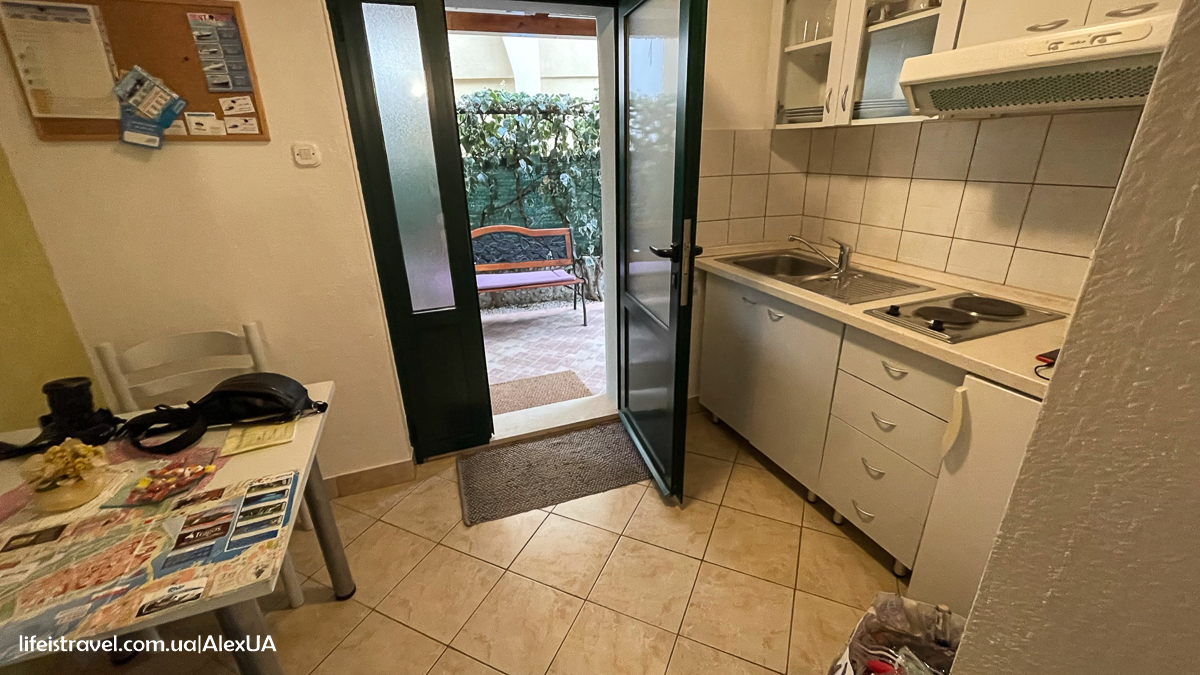
A budget-friendly place on Сiovo with a small garden and parking – Apartments in Trogir.
Where to Stay in Trogir – My Accommodation Tips
Trogir has plenty of beautiful apartments in the Old Town – from small backpacker hostels to atmospheric heritage hotels where you immediately start imagining yourself as the main character in a European travel novel.
My favorite option is the golden middle: a small apartment in the historic center. It’s convenient, beautiful, and gives you that “I live in a postcard” feeling. The only thing to keep in mind is parking – if you have a car, parking is near the center, but in peak season spots can be hard to find.
If parking right next to your accommodation is important, choose Čiovo Island. There are many apartments with parking opposite the Trogir waterfront, and prices are often lower than in the center of Trogir. From there, it’s about a 15–20 minute walk to the Old Town.
For backpackers and budget travelers, I can recommend Apartments Ana Trogir – clean, simple, and everything you need if you just want a cheap overnight stay without extra expectations.
A nice apartment in the center – That Place Studio Apartment: fair price, and everything inside for an independent, comfortable stay.
Apartment Tiramola – a small stylish guest house in the center of the Old Town.
XII Century Heritage Hotel – a historic boutique hotel with a fantastic sea view, very stylish and definitely more expensive. A good option if you want a little “special occasion” feeling, not just a place to sleep.
Important Before the Trip:
- find and book your hotel or apartment in advance, especially if you’re traveling in season;
- if you plan to combine Trogir with Split, the Makarska Riviera, or other coastal stops, renting a car makes life much easier;
- car rental in Croatia – LocalRent (from our experience, one of the most convenient options for an independent trip).
Final Thoughts
Trogir is one of those places where a small town can easily outshine much bigger tourist “stars.” There’s no need to run around chasing a checklist – the town itself makes you slow down, look around, and enjoy the walk.
I’d come here for at least one full day with an overnight stay: during the day – the Old Town, cathedral, market, and promenade; in the evening – the fortress, the lights, and a glass of wine by the water. And if you want beach time too, just stay on Čiovo and get the best of both worlds without unnecessary stress.


