

A lot of what people chase “across the ocean” is already waiting for us in Europe. Algarve – Portugal’s southern coast – is basically a highlight reel of cliffs, grottoes, turquoise coves and sunsets that make your phone camera question its life choices.
This is the Algarve part of our Portugal road trip (after Lisbon–Sintra–Cabo da Roca). We kept it simple: one base, radial day trips, maximum scenery, minimum suitcase gymnastics.
Why We Based Ourselves in Lagoa (and Not on the Beach)
Most people stay in Lagos or Albufeira. We chose Lagoa – a small town about 6 km from the ocean. Yes, we went to Algarve and didn’t sleep right on the coastline. No, it wasn’t a mistake.
Lagoa is perfect as a base if you’re here to explore, not to spend 10 days on one beach doing a heroic battle with your sunbed. Distances are short, the region is compact, and you can easily hop from cove to cove without feeling like you’re commuting.
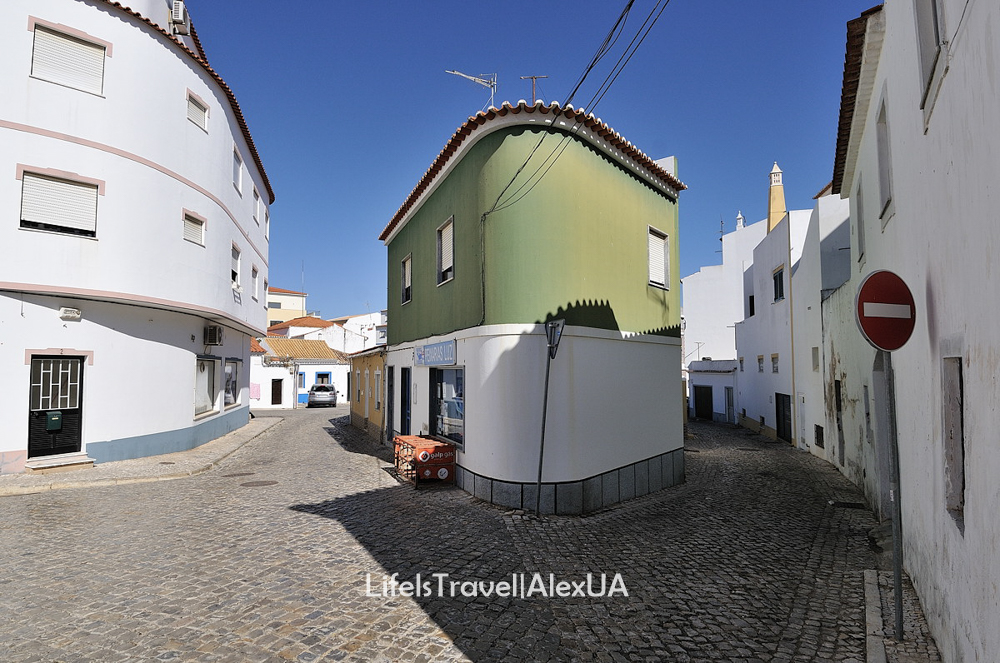
Where We Stayed: Casa Jardim Oasis (Small, Quiet, Exactly Our Style)
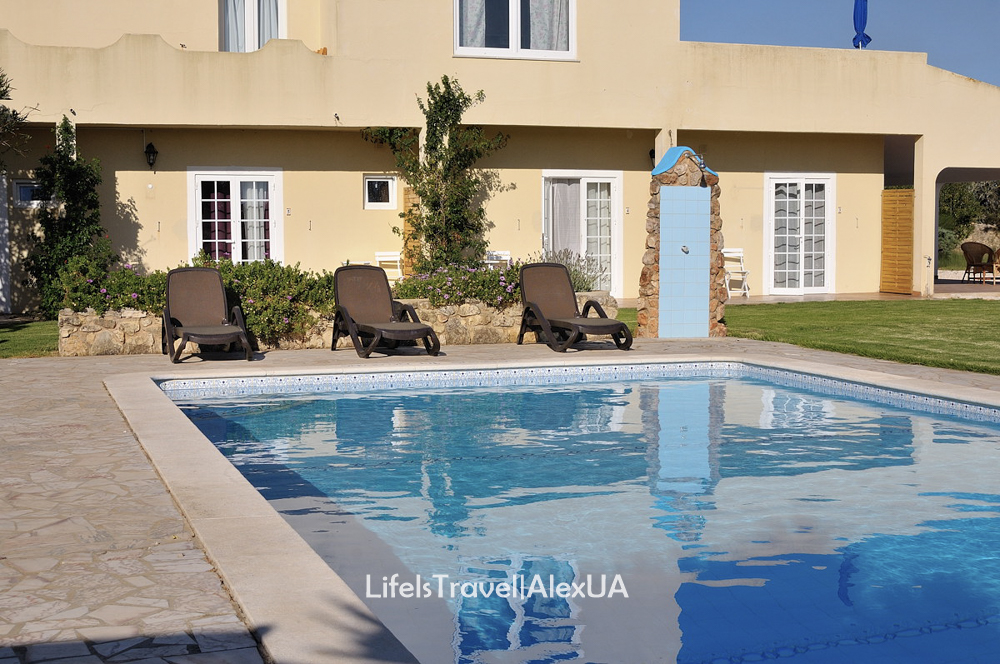
Our favorite was Casa Jardim Oasis – small, cozy, with spacious rooms and a terrace/balcony (essential for that evening glass of Portuguese wine). There’s a pool, a nice outdoor sitting area, free parking and solid Wi-Fi.
Breakfast won’t win a culinary Oscar, but it’s enough to start a beach day. Bonus detail we loved: a small wine fridge with decent bottles for just a bit more than supermarket prices. A supermarket is also close by.
Quick Reality Check: Heat, Ocean Temperature, Crowds
Before Algarve, people love to scare you with myths. Let’s fix that.
Myth 1: “August in Portugal is unbearably hot.”
If someone wrote that, they probably overheated in a tanning salon. Algarve can be warm, sure, but the Atlantic breeze often keeps it comfortable. Locals even joked that the “truly hot August” happens once every few years.
Myth 2: “The ocean is freezing – you can’t swim.”
If you’re used to Southeast Asia, the water will feel cooler. For everyone else, it’s like the Black Sea in June, around +20°C. There’s often surf (it’s the ocean, not a bathtub), but near Lagos you can find calmer water too.
Myth 3: “All beaches are packed in August.”
The busiest areas are around Albufeira and parts of Lagos. But Algarve has so many beaches that with a car and a bit of curiosity, you’ll find places that feel surprisingly empty.
The Route: What We Saw (and What’s Actually Worth Your Time)
First Algarve Highlights: Carvoeiro, a Lighthouse and the Big “Wow”
We started with Carvoeiro – a small resort town with a tiny beach and a long oceanfront walkway. Nice, easy, but we didn’t stay long.
We also stopped at Farol do Alfanzina (a lighthouse). Pro tip: Algarve light is often better after lunch – mornings can be harsh depending on your angle.
Then came the real star:
Praia da Marinha
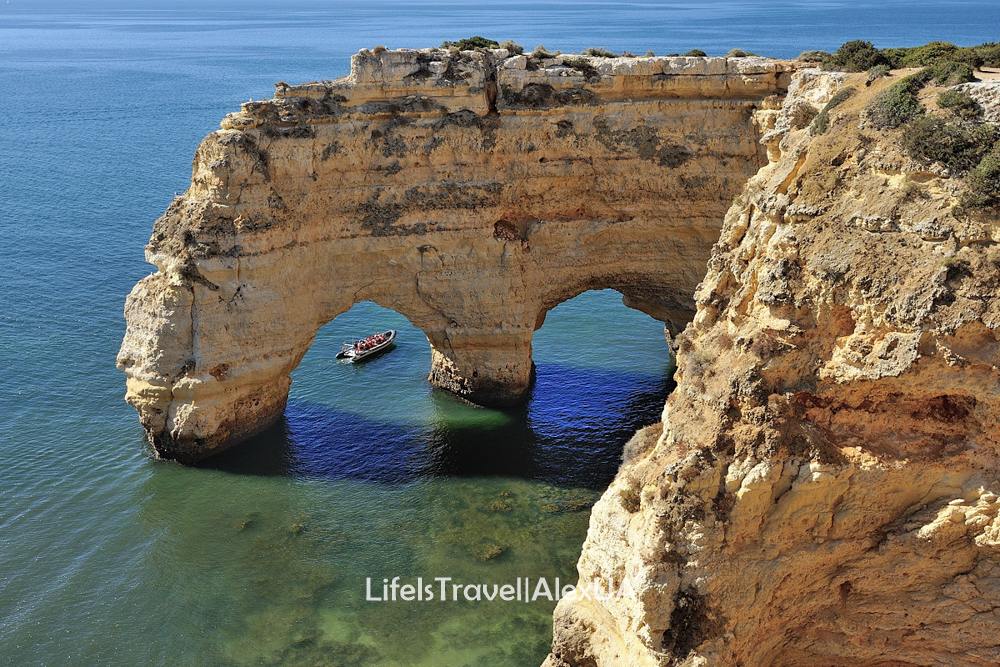
This is one of those places you don’t “visit” – you pause life and just stare. Dramatic cliffs, postcard views, and a restaurant with a view because Algarve doesn’t do “average.”
Boat trips from here are a classic: scenic, fun, and relatively affordable.
Benagil
Benagil is popular for a reason: caves and grotto tours. It’s busier than Marinha, usually slightly pricier on the water, but still worth a stop if caves are on your list.
Senhora da Rocha and Armação de Pêra: Quiet Beauty vs. Peak-Season Reality
Senhora da Rocha
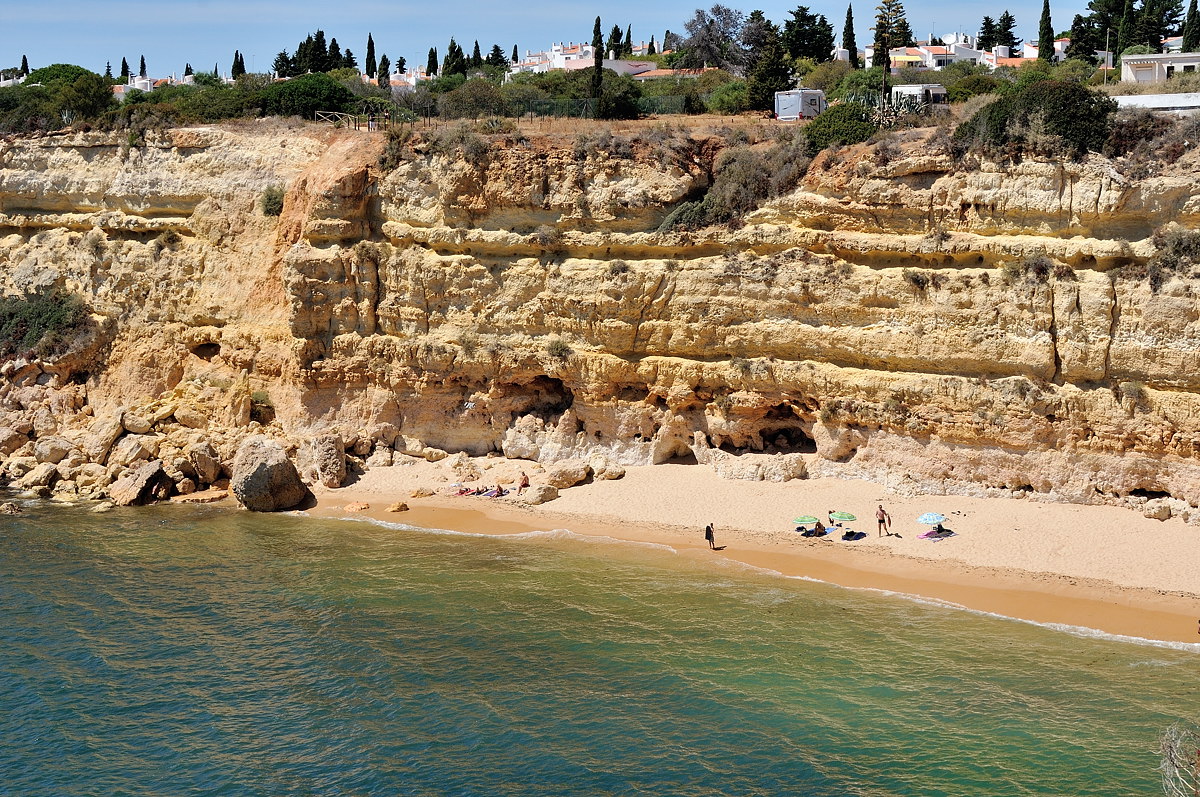
This is a great “base-beach” kind of place: a couple of hotels on the cliff with views that make you accidentally speak German (“Das ist fantastisch”), plus quieter, wilder sections if you walk through the rocks.
Parking tip (we used this spot): 37.09750; 008.38643
Most Algarve parking is free. If you accidentally end up at a paid lot, don’t panic – check nearby first. Paid parking exists, but it’s not the default.
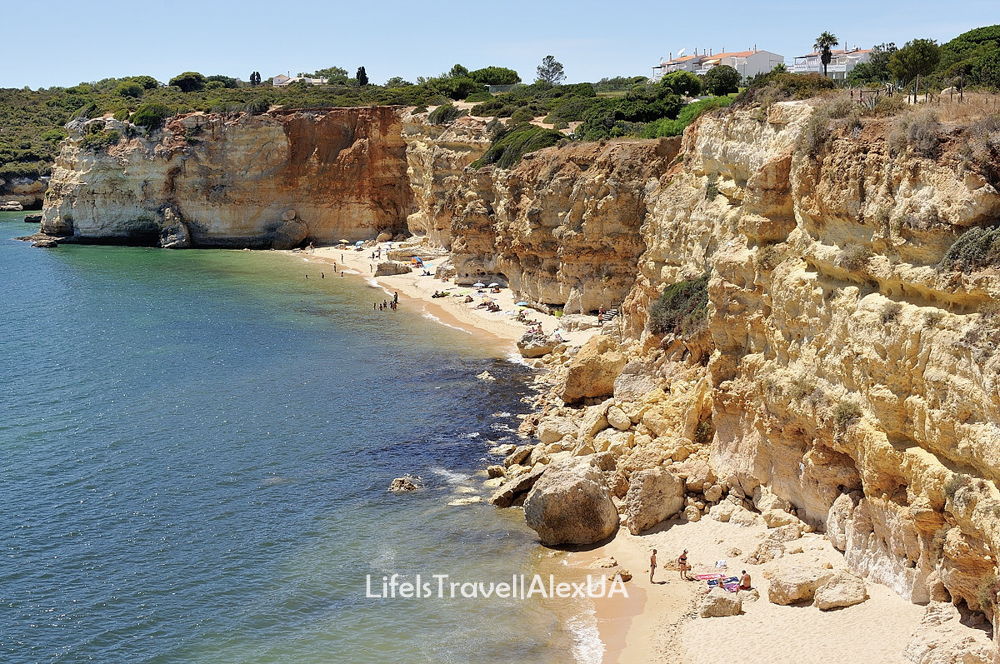
Armacao de Pera
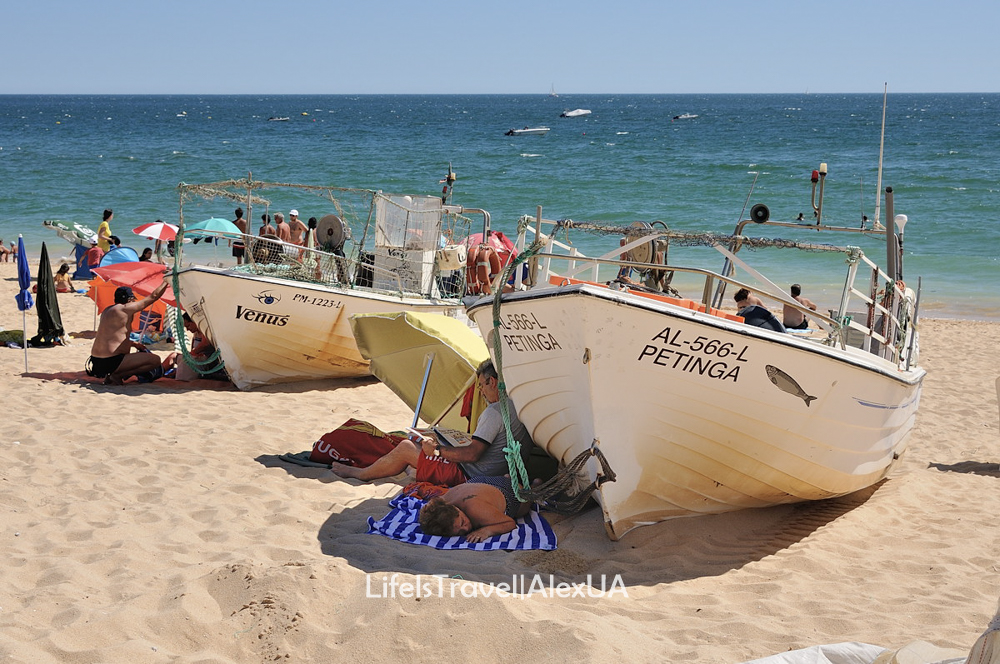
In summer it’s a typical resort town: long beach, lots of people, new buildings. Interesting fishing vibe at the end of the beach, dunes protected by law (so restaurants sit a bit back), and surprisingly fresh seafood.
It can be worth a quick visit, but if you’re not a crowd person, don’t force romance here.
Sagres and Cape Sao Vicente: The “Edge of Europe” Feeling
We headed toward Sagres, where the coastline gets rugged and dramatic. Fewer people than you’d expect – most crowds go straight to the lighthouse.
Cape Sao Vicente
This is one of those places that actually feels like a “last stop.” Ocean, cliffs, wind, space. If you can, plan it for later in the day – the light is better, and it’s a natural sunset magnet.
Praia do Beliche: A Beach for Independent Travelers
Near the cape, Beliche felt like a reward for people who travel by car and don’t need a bus schedule. Cozy, photogenic, fewer random crowds, and a restaurant with a view. The classic Algarve combo.
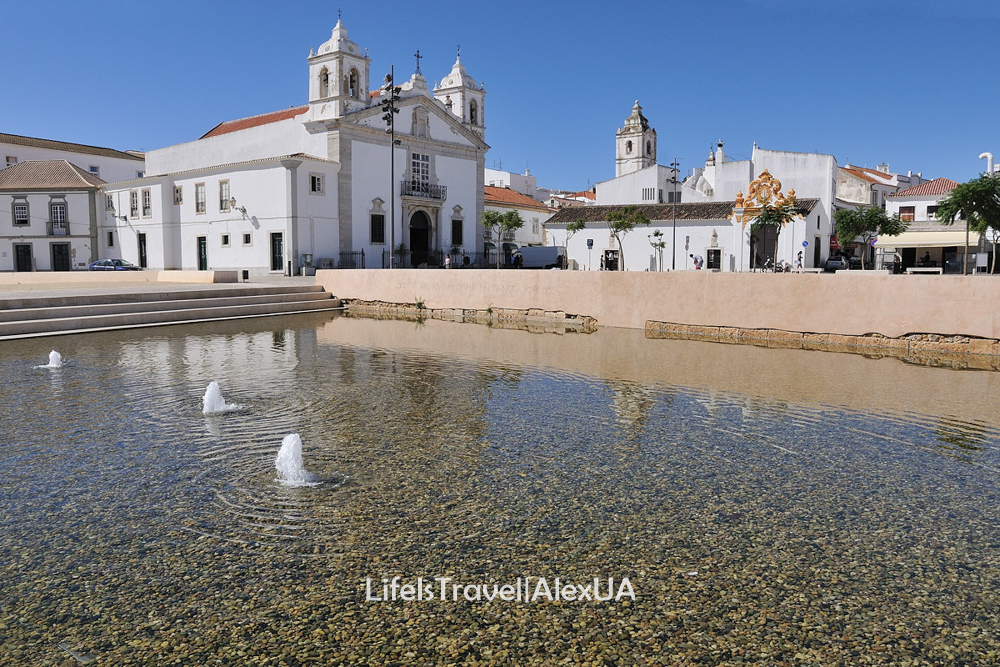
Lagos: Meia Praia, Dona Ana, and Ponta da Piedade
Meia Praia (calmer water option)
If you want “more swimming, less wave-negotiation,” this is a good choice. Long sandy beach, near town, easy access.
Parking coordinates we used: 37.106858; 8.665534 (about 50 meters to the beach)
Praia Dona Ana
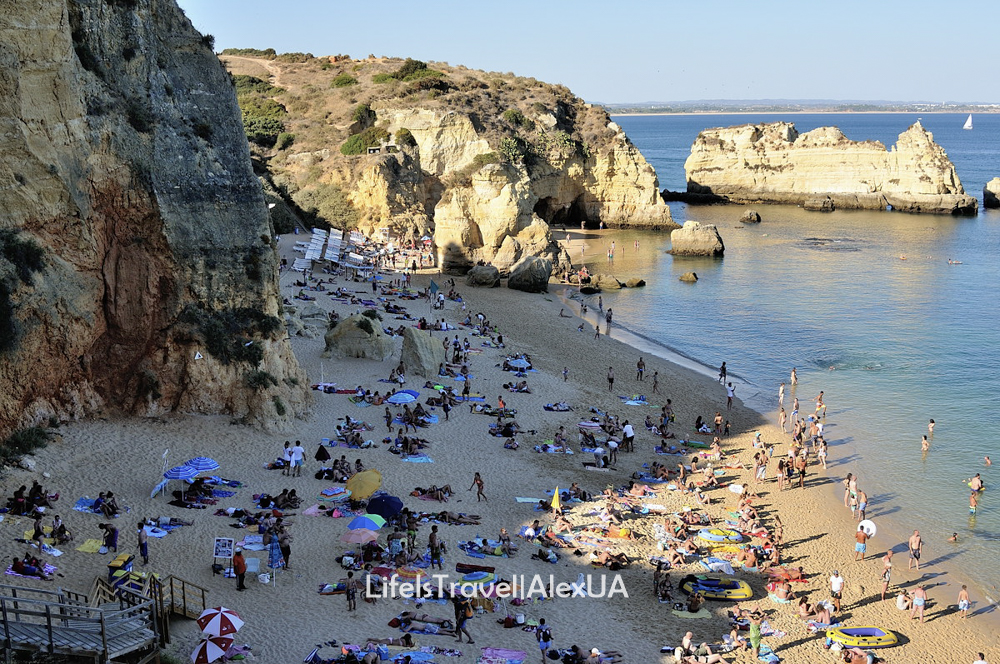
Probably the most photographed beach in Lagos. Beautiful… and therefore busy. Come early or close to sunset, then swim somewhere quieter.
Ponta da Piedade
Not a beach – a cliff wonderland. Wind + waves + time = natural sculpture. No architect can compete with this. Boat trips to caves also start here, and yes – you’ll wish you had more hours in a day.
25 August: Albufeira Area – Big Beaches, Less Drama
I had a strong feeling the Albufeira area wouldn’t hit as hard as Lagos or the west coast. It’s popular for a reason – and that reason is often “easy resort holidays,” not “jaw-dropping cliffs.”
Praia da Galé
Large, ordinary, crowded, and parking is paid. We left before the parking meter started charging our soul.
Praia da Lourenço
Two bars/restaurants, a small beach, and rocks in the water. Swimming isn’t ideal, but the surrounding scenery is great for photography.
Praia do Castelo (our favorite)
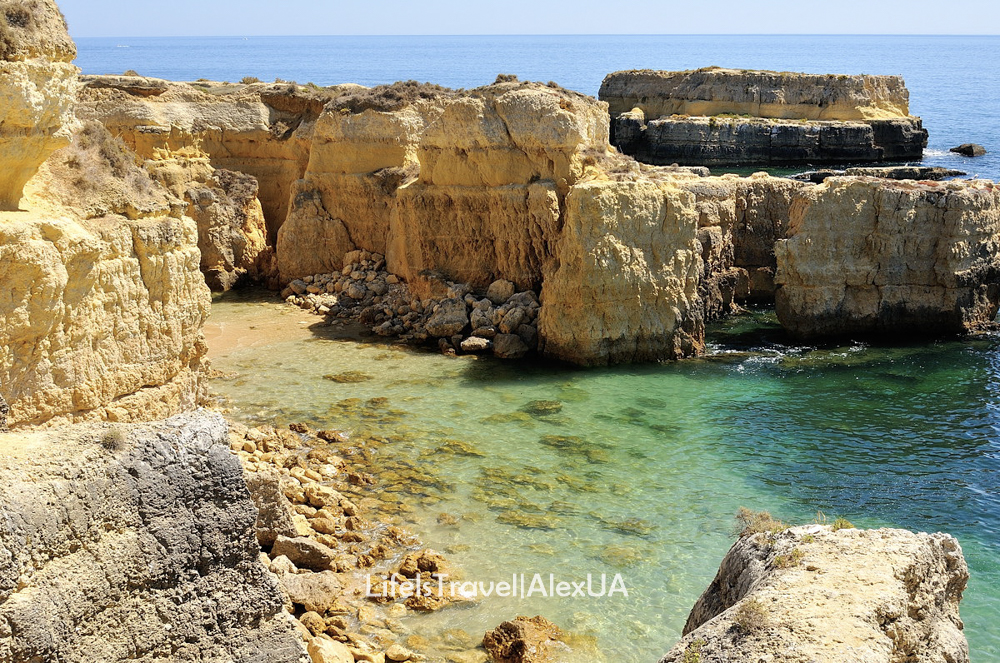
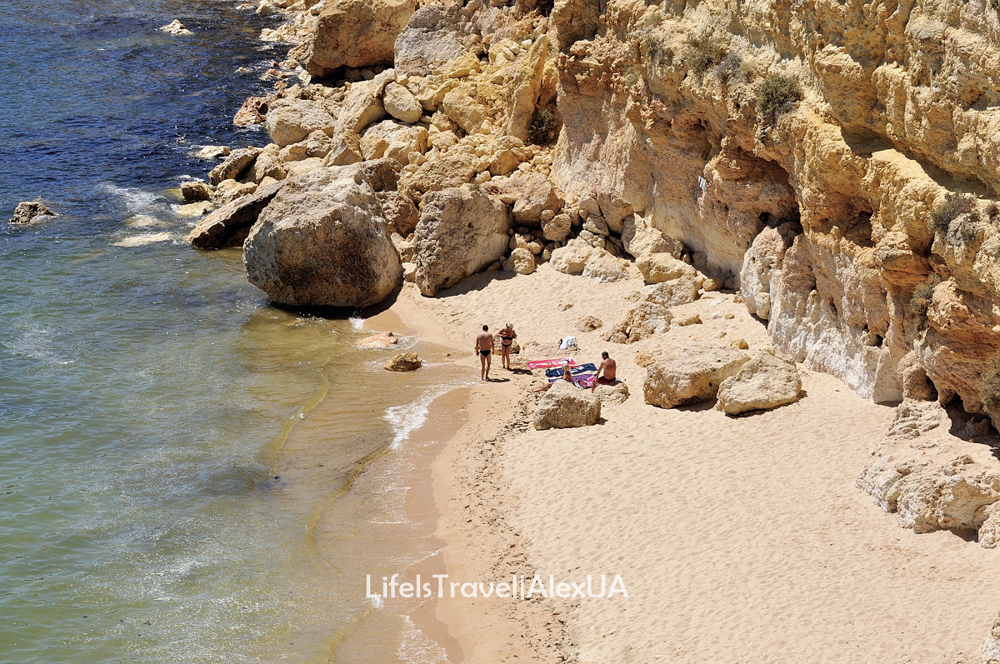
This day was saved by Praia do Castelo:
- intense yellow cliffs reflecting sunlight
- clear turquoise water
- a fantastic viewpoint restaurant (PicNic)
- a small grotto you can reach from shore (best at low tide)
Beach coordinates: 37.07354; 008.29812
Low tide tip: don’t overthink it. Sit at PicNic, watch the water level, and when rocks start appearing – grab your camera and go.
Also: rosé wine is best enjoyed where you bought it. It doesn’t love long road trips (unlike us).
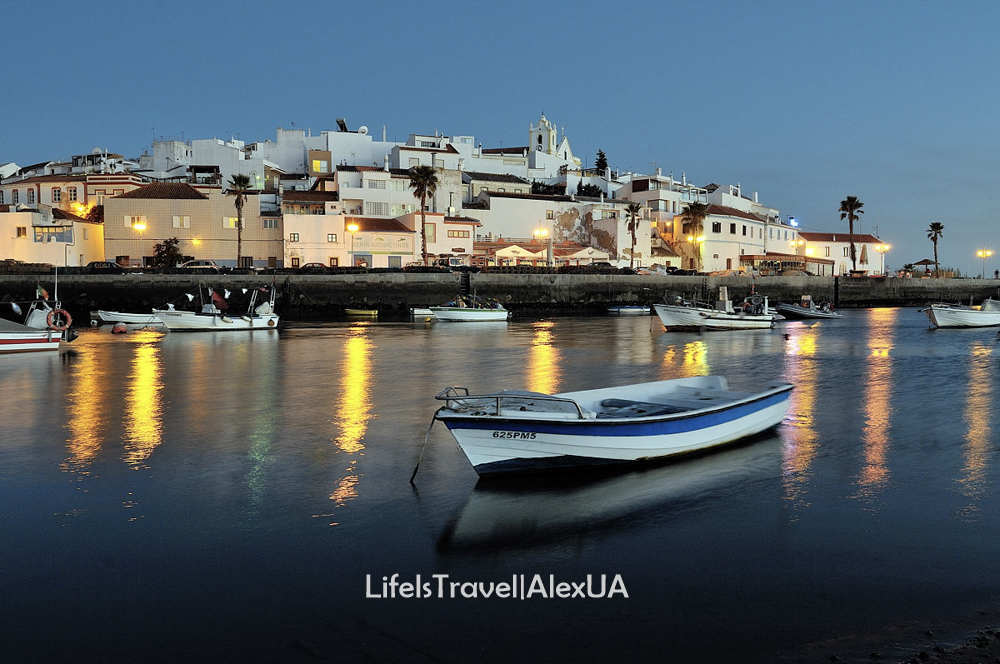
Ferragudo at Sunset (a Short Detour That Pays Off)
We got a tip about Ferragudo, a small village near Lagoa. That evening we almost stayed in with wine and the pool… but Portuguese wine has a strange side effect: it convinces you that “a quick drive at sunset” is a brilliant idea.
Viewpoint coordinates: 37.091233; 8.669761
Short stop, big reward.
26 August: West Coast (Vicentino Natural Park) – The “Real Atlantic”
We finally did what we should’ve done earlier: went to the west coast, the Vicentino Natural Park area. The road N268 became our favorite because it leads to the best kind of places: the ones that don’t need marketing.
Praia do Amado
This is where you feel the Atlantic: wide sand, cliffs, wind, surf culture. Water can be cooler here (often around +19°C in August). You don’t come for warm water – you come for the feeling.
Praia do Castelejo
Wilder, cooler, dramatic rock “teeth,” fewer people. Swimming is tricky because of rocks and conditions, but the views are absolutely worth it – especially near sunset. The local restaurant terrace is basically a “watch the ocean” seat with food.
27 August: The Last Full Day – Castelo, Sardines and One Fortress Detour
We planned a perfect lazy day: Castelo beach + local wine + Portuguese sardines. Then a sign kept following us: Silves with a castle silhouette. We asked around (including friendly neighbors from Morocco at breakfast) and confirmed: yes, Silves is historic, the red-brick fortress is a Moorish legacy… and it’s only 10 minutes away.
So we went.
Honest review: meh – but in a very reasonable way. In August, with the ocean nearby, castles can’t really compete. But inside the fortress there’s a surprise winner: fig trees. Big, sweet, and plenty. Take one. Nobody will chain you in a dungeon.
On the way back we did two quick stops:
- Praia do Coelha – fine for a quick swim and views, but not a must-drive
- São Rafael – nice, but in Algarve standards it feels modest. You can skip it.
Then back to Praia do Castelo, because that’s the ending we actually wanted.
Algarve for the Lazier Travelers: 7–10 Must-Visit Spots (One Short List)
If you have limited time and zero interest in “overplanning,” focus on these:
Praia da Marinha, Benagil, Praia do Castelo (+ PicNic viewpoint), Ponta da Piedade, Praia Dona Ana, Meia Praia (calmer swimming), Sagres, Cape São Vicente, plus one west-coast day in Vicentino: Praia do Amado and Praia do Castelejo. Bonus sunset stop: Ferragudo viewpoint.
Practical Route Tips: Make Algarve Easy
- Base yourself in Lagoa if you want flexibility and short drives.
- Afternoon light often beats morning light for photos.
- Low tide = best grotto/rock shots.
- Don’t obsess over Albufeira if you want dramatic scenery – head toward Lagos + west coast.
- The ocean is not a bathtub. Some beaches are for swimming, some are for watching. Both are valid.
- Car = freedom. Algarve without a car is a compromise. Algarve with a car is a trip.
Mini FAQ
Is Algarve too hot in August?
Usually no. The Atlantic breeze helps a lot.
Is the ocean too cold to swim?
If you’re used to tropical water, it feels cool. Otherwise, it’s manageable (often ~+20°C on the south coast).
Where is calmer water for swimming?
Try Meia Praia near Lagos.
Where are the best cliffs and viewpoints?
Marinha, Castelo, Dona Ana, Ponta da Piedade, Cape São Vicente.
Do I need a car?
Strong yes. The best places are spread out and the “wow” moments happen when you can turn off the main route.
28 August: Back to Lisbon + A Long Night
We drove straight to Lisbon on the highway (about three hours, no stops). Our flight was around 5 a.m., so we traded a hotel night for moonlit Lisbon walks. Were we tired? Yes. Was it worth it? Also yes.
Rough Budget for Two (Shared Costs Only)
- Flights: ~€400 (Air France–KLM)
- Accommodation: ~€50/night
- Food: ~€40–50/day
- Car rental + fuel: ~€500
In the off-season (winter/spring), most of these costs are usually lower.
Don`t forget:
- Find and buy airline tickets
- Hotel Booking – Booking.com
- Travel Insurance – Hotline Finance
- Car Rental – Local Rent


